
Quizience is supported by you the audience. When you purchase through links on our site, we may earn an affiliate commission.
Stovetop pressure cookers, useful as they are, fell out of fashion in the US around the middle of the 20th century, thanks to a host of innovations like TV dinners and microwaves. They weren’t found in most American households until the Instant Pot hit the scene in 2010 (though they’ve long been a staple in Indian cooking). Yep, that useful little multicooker is, at its heart, a pressure cooker.
Pressure cookers of either type offer a fast way to cook flavorful food, but quality can vary widely. If you’re going to invest in one, it should offer a variety of options for adjusting pressure (expressed as pounds per square inch, or psi), be safe and easy to use, and cook food evenly. We tested 14 stovetop and electric models and found seven we’d use any day of the week.
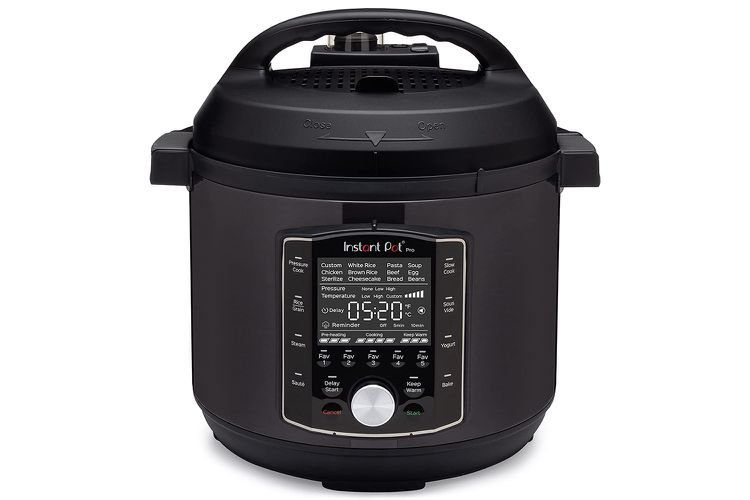
THE BEST ELECTRIC PRESSURE COOKER – Instant Pot Pro 10-in-1 6-Quart Pressure Cooker
What we liked: Of every electric option we tested, the Instant Pot Pro pressurized the fastest. And although it didn’t sear well, we liked that the pot didn’t spin when we stirred inside it. (That’s a common issue with multicookers.) We also liked that the stainless steel inner pot can be removed and put on electric, induction, and ceramic stovetops. That’s a design feature more multicookers should adopt, because it gives you the heat you need! The pot also has big handles that helped us lift it up and out of the cooker, even when it was piping hot; that’s a feature new to the Pro line. The push-button release and plastic cover around the valve made releasing steam stress-free and safe. And the condensation collection cup at the back of the machine? So smart. The control panel is easy to navigate; a dial and buttons that lie flush against the screen could be used without poring over the manual.
What we didn’t like: Like all electric pressure cookers, this one didn’t sear well when used inside the cooker; food got stuck to the bottom of the pot because it wasn’t very hot.
Key Specs
- Materials: Plastic, stainless steel
- Dimensions: 14.5 x 14 x 14 inches
- Capacity: 6 quarts
- Weight: 13 pounds, 11 ounces
- Induction-compatible: Interior pot; yes
- Warranty: Limited 1-year
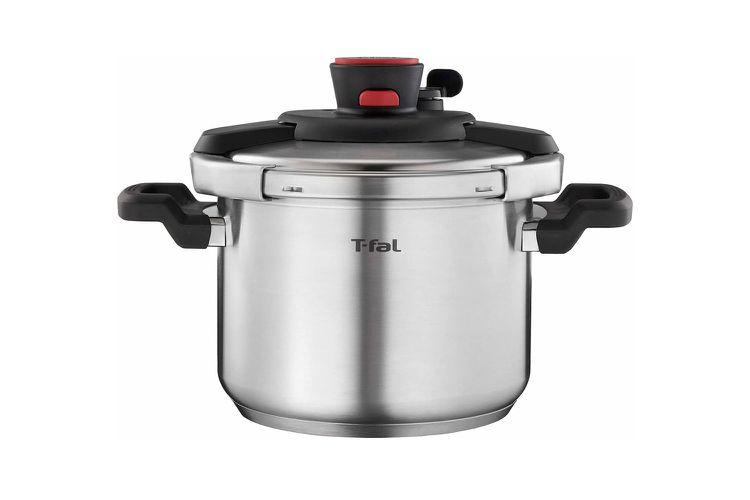
THE BEST STOVETOP PRESSURE COOKER – T-Fal Clipso Pressure Cooker
What we liked: The T-Fal Clipso is what you get when you take a great stainless steel pot and add the ability to pressurize it. It’s simple, basic, and reliably good. The heavy, perfectly flat bottom gave us gorgeous sears and sautéed without overcooking ingredients. If you own the 6.3-quart Clipso, there’s no need to invest in a stockpot unless you want something much larger. The two handles made it safe and easy to grab and lift. And the sealing mechanism was refreshingly easy to use. All we had to do was press a button to lock or unlock it. Releasing steam was as easy as turning a valve, which made it more akin to electric pressure cookers. (Many stovetop models require the user to continually hold down the valve to release steam.)
What we didn’t like: There’s no pressure gauge, so we didn’t know how much we were cooking with. The Clipso’s maximum operating pressure is 12 psi, a little less than most stovetop models and about the same as most electric ones.
Key Specs
- Materials: Stainless steel
- Dimensions: 11 x 15 x 10 inches
- Capacity: 6.3 quarts
- Weight: 7 pounds, 3 ounces
- Pressure release: Spring-loaded
- Induction compatible: Yes
- Warranty: 10-year limited
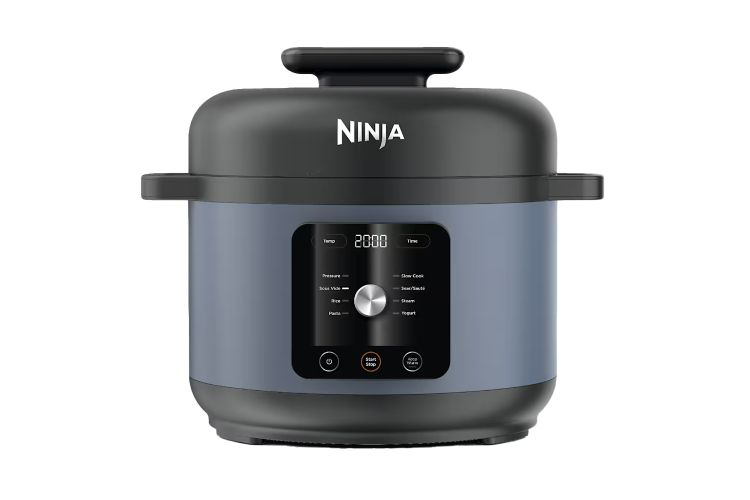
THE BEST BEGINNER-FRIENDLY ELECTRIC PRESSURE COOKER – Ninja HyperHeat 9-in-1 6.5 quart Pressure Cooker
What we liked: For those who find an Instant Pot’s interface cluttered with superfluous functions, the Ninja HyperHeat offers a streamlined alternative. With a control knob, clearly labeled dials and buttons, a heating and cooking progress bar, and a ceramic-lined cooking pot, the HyperHeat is both easy to use and clean. It seared meat deeply and pressure-cooked with the best of ‘em, turning rock-hard beans tender. When it came time to release pressure, the handle on the HyperHeat’s lid allowed us to vent it safely.
What we didn’t like: While a ceramic-lined cooking pot is certainly easier to clean than a stainless steel one, it poses durability concerns. You also have to be mindful about the kitchen utensils you use, too (no metal!).
Key Specs
- Materials: Stainless steel, ceramic
- Dimensions: 13.89 x 14.76 x 12.24 inches
- Capacity: 6.5 quarts
- Weight: 15 pounds, 13.92 ounces
- Induction compatible: No
- Warranty: 1-year limited
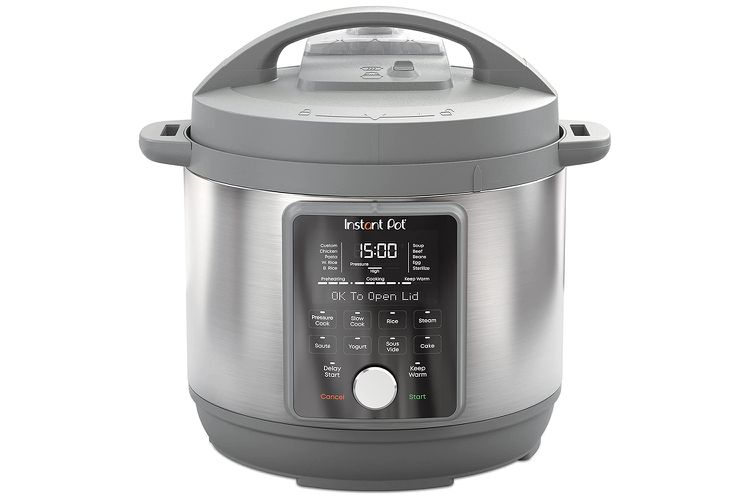
THE BEST LARGE MULTICOOKER – Instant Pot Duo Plus 8-Quart Multi-Use Pressure Cooker V4
What we liked: The Instant Pot Duo 8-Quart has a bigger capacity than the other Instant Pots on this winners’ list, making it a good choice for large-batch pressure cooking. Like the Pro, this one sports a progress bar on the control panel that shows the user how far along in the process the pot is—preheating, cooking, or keep warm. The brisket was outstandingly good; tender, with a fall-apart texture. This Duo costs less than the Pro, even though it’s larger. Why? The Pro is a newer model with upgraded features: primarily a more powerful heating element, handles on the inner cookpot, and a flatter bottom that makes for more even cooking. (We did notice some scorching on the mirepoix with the Duo.) All that said, we think both models are good purchases, and if you want a basic electric pressure cooker with a handful of extra functions, you’ll be very happy with this one.
What we didn’t like: After using the Breville Fast Slow Pro, the lack of customization on any pressure cooker felt frustrating. There are only two pressure settings here: low and high. (The Instant Pot Pro has the same settings.) The beans were unevenly cooked, with some being very toothsome. The risotto took double the time of the stovetop and Breville models.
Key Specs
- Materials: Stainless steel, plastic
- Dimensions: 14.53 x 14.53 x 13.98
- Capacity: 8 quarts
- Weight: 15 pounds, 13 ounces
- Induction-compatible: No
- Warranty: 1-year limited
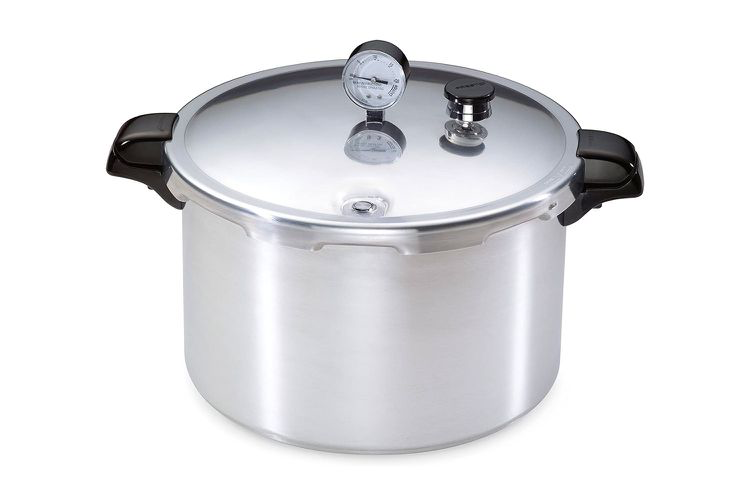
THE BEST STOVETOP PRESSURE COOKER FOR CANNING – Presto 16-Quart Pressure Canner and Cooker
What we liked: The Presto stovetop pressure cooker includes all the details canners will want: primarily, a pressure gauge that goes up to 20 (and tops out with the well-placed warning, “Caution”). It’s big—16 quarts, to be exact—which makes it ideal for canning in batches. It can hold 10 pint-sized and seven quart-sized mason jars. But how did it fare in our recipe tests? Very well! It made the best-textured batch of beans with creamy centers and no split skins. Searing the brisket was faster because its cooking surface area was larger than that of any other model we tested. The meat was tender all the way through, with a small amount of broth leftover. When the Presto reaches 15 psi, it automatically releases some steam—that’s a super safety feature. The plastic handles stayed cool even when we were cooking on high.
What we didn’t like: It would take a lot of practice to nail the perfect psi. When cooking over a low, medium, or high stovetop, our psi reading was typically a couple of points off. That’s the sort of thing cooks can learn with time, and by getting to know how a piece of cookware reacts with their stovetop. There’s no quick-release function for depressurizing. That doesn’t matter if you’re canning, because a quick pressure change can cause cans to shatter. But it’s mildly annoying if you’re using it to cook dinner.
Key Specs
- Materials: Aluminum, plastic
- Dimensions: 13.5 x 17.25 x 12 inches
- Capacity: 16 quarts
- Weight: 10 pounds, 8 ounces
- Induction-compatible: No
- Warranty: 12-year limited
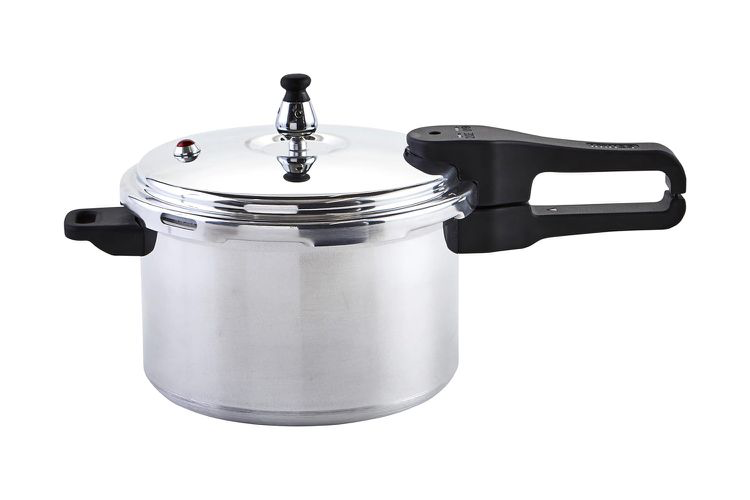
THE BEST BUDGET STOVETOP PRESSURE COOKER – IMUSA 7 Quart Stovetop Aluminum Pressure Cooker
What we liked: Seven quarts is a moderate, useful size: It’s large enough to cook big batches and use as a stockpot when it’s not being used to pressure cook. We were duly impressed by how well the Imusa pressure cooker worked, considering it was the lowest-priced one we tested. The reason why it’s so affordable is the cookpot material and the lower pressure ceiling. Aluminum is cheaper than stainless steel. And while it doesn’t heat as evenly, it’s much more responsive to temperature changes, meaning it heats up fast. It also sautéed well.
What we didn’t like: The jiggler-style release mechanism must be pressed down the entire time steam is releasing. That’s not a deal-breaker, but it’s cumbersome when judged against more user-friendly designs like valves. The bottom is convex, so it’s tough to get an even sear on large cuts of meat. The maximum psi is 10—that’s low, but not bad if you plan to primarily pressure-cook delicate foods like vegetables, eggs, rice, and pasta.
Key Specs
- Materials: Aluminum
- Dimensions: 10.25 x 17 x 9.5 inches
- Capacity: 7 quarts
- Weight: 3 pounds, 13 ounces
- Induction-compatible: No
- Warranty: 1-year limited
Which Should You Buy: A Stovetop or Electric Pressure Cooker?
| Electric Pressure Cookers vs. Stovetop Pressure Cookers | ||
|---|---|---|
| Type of Pressure Cooker | Pros | Cons |
| Stovetop Pressure Cookers | Get hotter Sear and sauté well | Need to be monitored Require manual pressure release Not customizable |
| Electric Pressure Cookers (Multi-cookers) | Have many presets Easy to de-pressurize Include other functions | Not great at searing Max out at lower pressure Typically more expensive |
Stovetop cookers get hotter and can be used in place of a soup pot or stockpot. But you can’t “set and forget” them, and they require manual pressure release. They’re a good fit for cooks who are confident with manual pressure cooking and can create deeper flavor by giving a good sear. They also let you can food. Electric pressure cookers are better for cooks who want a versatile appliance and who like to use presets and programs to cook.